Knowledge Center
UK Debt Help Knowledge Centre
Expert guides and practical articles covering CCJs, personal guarantees, debt collection, creditor letters, bailiffs, bankruptcy and business debt. Understand your position, your rights and what options may be available

Clarity.
Time.
Choice.
Control.
Free UK Debt Help Guides
In-depth guides written to help individuals and company directors understand debt, creditor action and the options available to them
UK Debt Help Knowledge Centre
Clear, practical guides and articles to CCJs, creditor letters, personal guarantees, bankruptcy, business debt and enforcement and more...
What do you need help understanding? Read the latest.
Understanding UK Debt Collection Letters
Debt Help, Debt Collection Letters, UK Legal Notices
Debt Collection Letters, Letters Before Claim, and Default Notices: What They Really Mean for You
If you have received a debt collection letter, a Letter Before Claim, or a Default Notice, it can feel frightening and overwhelming. This guide, created for individuals and business owners in the UK, explains what these letters mean, when you might receive them, how tools like Letter Checkr can help you understand them, and how Stop Your Debt UK can support you in taking back control.
What Is a Debt Collection Letter?
A debt collection letter is a written notice from a creditor or a debt collection agency telling you that money is owed and asking for payment. You might receive one if you have fallen behind on:
Credit cards or store cards
Personal loans or personal guarantees on business loans
Overdrafts, car finance, or buy-now-pay-later agreements
Utility bills, council tax, or other household debts
These letters often arrive after you have missed several payments or not responded to earlier reminders. They can be written in formal, legal-sounding language, which is why many people panic when they open them. However, a debt collection letter is also an opportunity to act early before the situation escalates into court action or enforcement.
💡 Pro Tip: Never ignore a debt collection letter. Even if you cannot pay in full, responding and seeking advice quickly can dramatically improve your options.
Understanding Letters Before Claim (Letter Before Action)
A Letter Before Claim (sometimes called a Letter Before Action) is more serious than an initial debt collection letter. It is usually sent when a creditor or debt collector is considering taking you to court to recover the money. In England and Wales, this is part of the pre-action protocol for debt claims, which is meant to give you a final chance to respond and resolve matters before legal proceedings start.
A genuine Letter Before Claim should clearly state:
Who the creditor is and how much they say you owe
Details of the agreement or account (for example, a credit card or loan)
How the debt has arisen and any interest or charges added
A clear warning that court action may follow if you do not respond within a set timeframe (often 30 days)
This is a crucial moment. If you do nothing, the creditor may issue a County Court Claim, which can lead to a County Court Judgment (CCJ), enforcement action, and serious damage to your credit file. If you respond and seek help, you may be able to agree affordable payments, challenge errors, or explore formal debt solutions instead.
What Is a Default Notice Letter?
A Default Notice is a specific type of letter used for many regulated credit agreements under the Consumer Credit Act, such as credit cards, personal loans, and hire purchase. It is a formal warning that you have broken the terms of your agreement, usually by missing payments, and that the lender plans to “default” the account if you do not put things right by a certain date (often at least 14 days from the notice).
A Default Notice letter typically explains:
How much you are behind and what you must pay to “remedy” the breach
The date by which you must pay or contact the lender
What may happen if you do not respond (for example, termination of the agreement, passing the debt to collectors, or court action)
Once a default is registered, it usually stays on your credit file for six years, even if you later pay the debt. That is why understanding and responding to a Default Notice promptly is so important. It is another point where the right support can help you limit long-term damage to your financial future.
When Might You Receive These Letters?
People often assume these letters only arrive after months of ignoring debts. In reality, there are many situations where ordinary, responsible people end up facing debt collection, Letters Before Claim, and Default Notices:
A sudden drop in income due to redundancy, illness, or reduced hours at work
Business owners with personal guarantees on company loans when the business struggles or fails
Relationship breakdown, separation, or divorce leading to extra costs and missed payments
Rising living costs, credit card reliance, and multiple debts becoming unmanageable over time
In many cases, the first sign that the situation has escalated is a more formal letter landing on the doormat. You might see headings such as “Notice of Default Sums”, “Pre-Action Protocol – Letter of Claim”, or “Final Demand”. The language can feel intimidating, but it is essential to remember that these are stages in a process, not a final verdict on your future.
Recognising each stage of the debt process helps you act before it reaches court.
How Letter Checkr Helps You Understand Your Debt Letters
One of the biggest challenges people face is simply understanding what the letter is saying. Legal terms, references to legislation, and tight deadlines can make it hard to know what to do next. That is where tools such as Letter Checkr can be extremely valuable.
Letter Checkr is designed to help you interpret debt collection letters, Letters Before Claim, and Default Notices. By checking the wording, structure, and information included, it can help you identify:
What type of letter you have received and how serious it is
Whether the creditor appears to be following the correct process and timeframes
What your options might be, such as requesting more information, disputing the amount, or proposing a payment plan
Using a tool like Letter Checkr alongside professional guidance from a service such as Stop Your Debt UK can give you both clarity and confidence. You are no longer guessing what the letter means; you are informed and better prepared to respond.
📌 Key Takeaway: Understanding the letter is the first step. The next step is using that understanding to take constructive action with the right support.
Practical Steps to Start Getting Out of Debt Trouble
Receiving a debt collection letter, Letter Before Claim, or Default Notice does not mean you are out of options. It means it is time to act. Here are some practical steps you can take today to begin moving out of crisis and towards control:
Open and organise every letter. Keep all correspondence together. Make a note of dates, deadlines, and the names of creditors or debt collectors involved.
Use Letter Checkr or similar tools. Identify whether you are dealing with a standard collection letter, a Letter Before Claim, or a Default Notice so you can prioritise the most urgent issues.
List your debts and income. Write down who you owe, how much, and what you can realistically afford to pay each month. This will be essential for any negotiation or debt solution.
Seek professional, empathetic advice. Services like Stop Your Debt UK are here to provide clear, non-judgmental guidance. You do not have to face creditors or complex legal terms alone.
Explore your options. Depending on your situation, you may be able to agree reduced payments, request a breathing space period, challenge incorrect debts, or consider formal solutions such as debt management plans, IVAs, or bankruptcy where appropriate.
How Stop Your Debt UK Can Support You
At Stop Your Debt UK, we understand how isolating and stressful debt can feel. Our purpose is to shelter you from the storm that debt creates by giving you the time, clarity, and support you need to make informed decisions. We work with individuals and business owners facing:
Personal debts and credit card arrears
Personal guaranteed loans linked to struggling businesses
County Court Judgments and the threat of enforcement action
Bankruptcy concerns and long-term financial rebuilding
Our approach is compassionate and personalised. We take the time to understand your full situation, explain your options in plain English, and help you decide on a path that protects your wellbeing as well as your finances. Whether you have just received your first collection letter or are already facing Letters Before Claim and Default Notices, it is never “too late” to seek help.
Your Next Step: Turn a Scary Letter into a Turning Point
A debt collection letter, a Letter Before Claim, or a Default Notice can feel like the beginning of the end. In reality, it can be the start of you taking back control. With the right tools and support, you can move from fear and confusion towards clarity, choice, and a realistic plan to rebuild your financial health.
If you have a letter in front of you right now, you do not have to face it alone. Use Letter Checkr to understand what it means, and then take the most important step of all: reach out for professional help that treats you with dignity and respect.
✅ Book a free consultation with Stop Your Debt UK today. We will review your letters, explain your options, and help you create a personalised plan so you can start regaining control over your debts and your future.

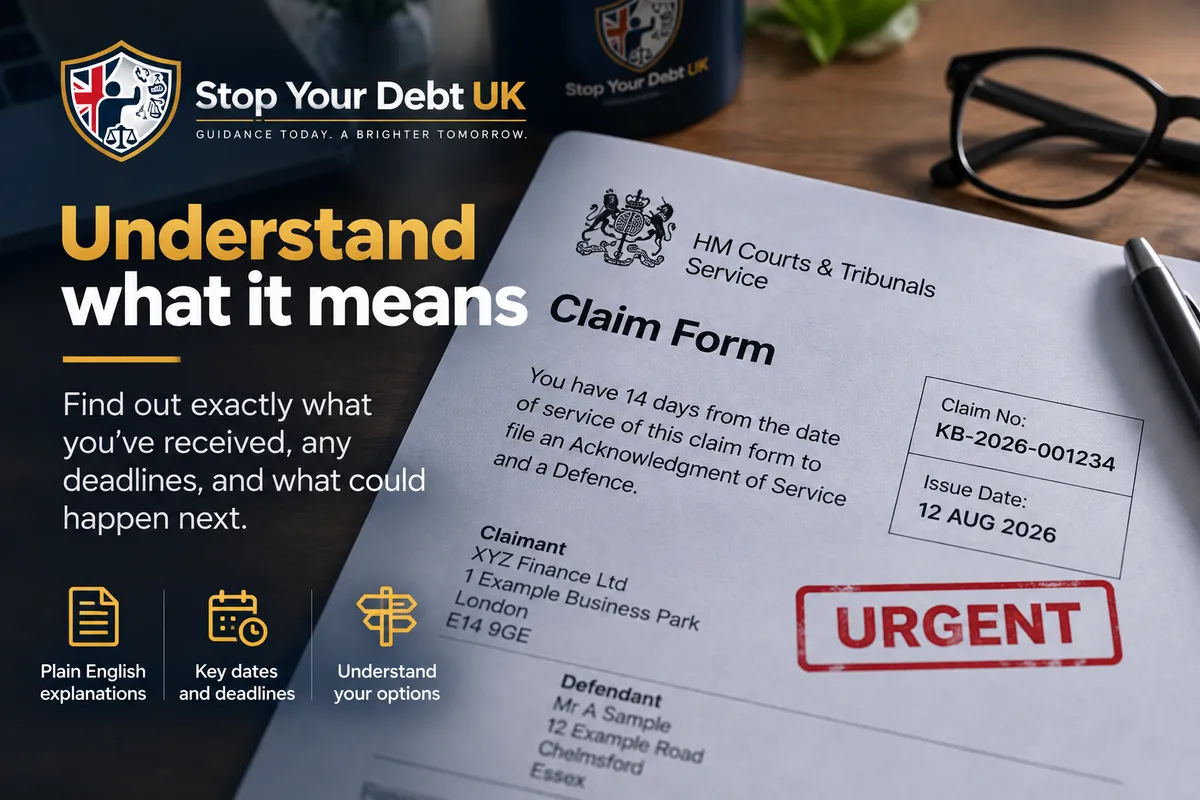
What Does This Letter Actually Mean?
Try LetterChekr™
Three Simple Steps
1. Upload Your Letter
Take a clear photograph of the letter or upload your document.
You don't need to understand what it says before uploading it.
2. Understand What It Means
LetterChekr™ reviews the contents and explains the important information in plain, straightforward English.
3. Understand What May Happen Next
You'll receive clear information about the urgency of the correspondence, important dates, potential consequences and the general processes that may follow.
LetterChekr™
Book a Call With a Consultant
Complete your details below and one of our consultants can discuss the letter with you and help you understand the options available.
That's it. In around 30 seconds, you'll receive a plain-English explanation of your letter.
Stop Your Debt UK is a national debt support platform helping individuals and company directors understand financial problems, organise their position and access the appropriate professional support when specialist or regulated advice is required.
Quick links
Services
Stop Your Debt UK is not an FCA-authorised debt advice firm or an SRA-regulated law firm. Where regulated or reserved professional services are required, the relevant work is undertaken by an appropriately authorised third-party professional. Learn More
© Stop Your Debt UK. 2026. All Rights Reserved.