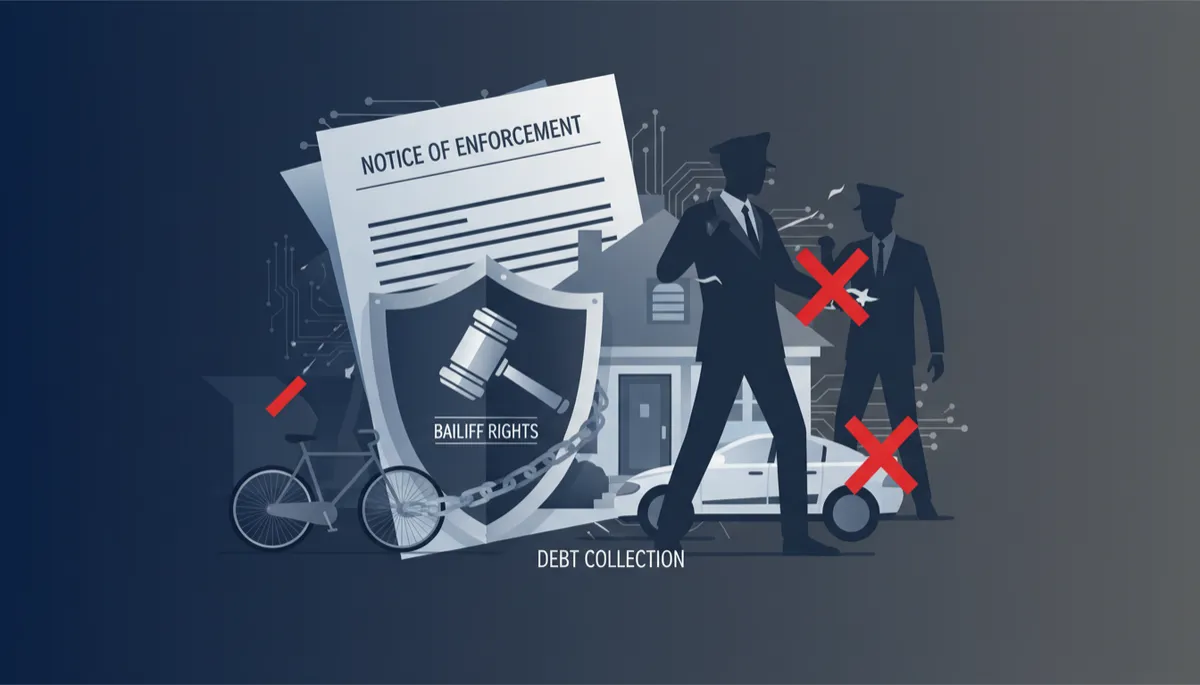
Know Your Rights: Bailiffs & Enforcement Notices
Bailiffs, Notice Of Enforcement, Debt Collection, Bailiff Rights
Notice of Enforcement and Bailiffs: Know Your Rights Before You Open the Door
If you have received a Notice Of Enforcement or been told that bailiffs are on their way, it can feel frightening and overwhelming. Understanding what bailiffs can and cannot do is the first step to taking back control and protecting yourself, your family, and your essential belongings. This guide from Stop Your Debt UK explains your bailiff rights in clear, practical language so you can respond calmly and confidently.
What Is a Notice Of Enforcement?
A Notice Of Enforcement is a formal letter sent by enforcement agents (commonly called bailiffs) to tell you they intend to collect a debt. It usually follows a court judgment or liability order and is part of the debt collection process. By law, the notice must give you at least seven clear days’ warning (not counting the day it is sent or the day of the visit) before a bailiff can come to your property, except in very rare circumstances.
The Notice Of Enforcement should clearly state:
Who the creditor is and how much you allegedly owe
Which enforcement company or bailiff is acting on their behalf
How to contact them and arrange payment or discuss the debt
The date from which a bailiff may visit if no agreement is reached
💡 Pro Tip: Receiving a Notice Of Enforcement is often the last warning before bailiff action. It is also a key opportunity to get help. Contacting a specialist, such as Stop Your Debt UK, at this stage can open up options and may prevent a visit entirely.
What Bailiffs Can Legally Do
While bailiffs have specific powers, they are not all-powerful. Knowing the limits of their authority helps you recognise when their behaviour crosses the line. In general, a certificated bailiff acting on a court order can:
Visit your home or business to collect payment for certain types of debts, such as council tax, parking fines, court fines, and some business debts
Ask you to pay the debt in full or agree to a repayment plan, often called a controlled goods agreement, where some non-essential items are listed as security
Take control of certain non-essential goods you own, either at your property or on the public highway, to be sold if you do not keep to an agreement
Even when they are acting within the law, bailiffs must follow strict rules on behaviour and conduct. They must treat you fairly, provide identification when asked, and clearly explain the reason for their visit and the amount they are claiming. Debt collection should never feel like harassment or intimidation.
What Bailiffs Cannot Do – Your Core Protections
Just as important as what bailiffs can do is what they cannot do. Many people are pressured into paying money they simply do not have because they are given a misleading picture of bailiff powers. Understanding your bailiff rights is essential to staying safe and making rational decisions.
They cannot break and enter your home
For most types of debt, bailiffs cannot break into your home. They are only allowed to enter through what is known as “peaceful entry”. That means:
You open the door and invite them in, or you step aside and clearly allow them to enter, or
They enter through an unlocked door or gate without using force
They cannot:
Push past you or force their way through the door if you are blocking it
Climb through a window, break a lock, or damage doors, windows, or gates to get inside
There are very limited exceptions for certain criminal fines and HMRC debts, but even then, strict procedures apply and most household debts do not fall into this category. For the vast majority of people facing council tax, parking fines, or consumer debts, you are under no obligation to let a bailiff into your home, and they are not allowed to break in.
📌 Key Takeaway: If you keep your doors locked and do not invite them in, a bailiff collecting most common debts cannot lawfully enter your home by force.
They cannot take essential possessions such as a work car or bike
Bailiffs are also restricted in what they can take. The law recognises that some items are essential for living and earning a living. These are protected because taking them would push you further into hardship and make it even harder to repay debts in the long term.
In most cases, bailiffs cannot take possessions that are deemed necessary, such as:
Tools, equipment, and books that you need to do your job or run your business, up to a certain value
A work car or bike that you reasonably need to travel to work, carry out your job, or get to medical appointments, again within set value limits
Basic household items such as your cooker, fridge, beds, clothing, and essential furniture
If a bailiff threatens to remove an item you rely on for work or essential living, you have the right to challenge this and should seek immediate advice. At Stop Your Debt UK, we frequently help clients contest attempts to take protected goods and ensure that enforcement agents stick to the rules.

Vehicles genuinely needed for work are often protected from bailiff seizure.
How Some Bailiffs Break the Rules and Use Scare Tactics
Despite clear regulations, many people report that bailiffs break the rules or stretch them to the limit. Complaints often centre on aggressive behaviour, misleading statements, and deliberate attempts to frighten people into paying money they simply cannot afford. Sadly, scare tactics are common in debt collection, especially when individuals do not know their rights.
Common scare tactics include:
Claiming they can “come back with a locksmith” or “break in later today” when they have no legal power to do so for your type of debt
Threatening to “take everything” or leave you with no furniture, which is not allowed under bailiff regulations
Suggesting you could be arrested or imprisoned simply for not paying, which is rarely true and does not apply to most civil debts
These tactics are designed to trigger panic. When you are scared, you are more likely to hand over rent money, food money, or business cash just to make the situation go away. This can leave you unable to meet other essential bills and deepen your overall debt problems. Knowing that a bailiff cannot enter your home by force and cannot take essential possessions gives you the breathing space to seek proper advice before agreeing to anything.
💡 Pro Tip: If you feel pressured or threatened, you are allowed to end the conversation, keep the door closed, and speak to a professional adviser. You do not have to make decisions on the doorstep.
Practical Steps If You Receive a Notice Of Enforcement
When a Notice Of Enforcement lands on your doormat, it is natural to feel anxious. But you are not powerless. Taking a few calm, practical steps can transform the situation and often prevent the worst outcomes of bailiff action.
Check the details carefully. Make sure the name, address, and amount claimed are correct. Errors are more common than you might think, especially when debts have been sold or passed between collection agencies.
Confirm the type of debt. Different rules apply to different debts. Council tax, parking fines, and magistrates’ court fines are treated differently from credit cards or overdrafts. This affects what bailiffs can do and what options you have.
Do not ignore the notice. Ignoring it will not make it go away and may lead to higher fees and more pressure. Instead, use the time before any visit to get advice and explore solutions.
Seek independent debt quickly. Services like Stop Your Debt UK can review your situation, explain your bailiff rights, and help you negotiate affordable arrangements or consider longer-term solutions such as debt management plans or insolvency options if appropriate.
Protecting Yourself on the Day of a Bailiff Visit
If a bailiff does attend your property, you still have important protections. Remember, for most debts they cannot enter your home unless you invite them in or leave a door unlocked. You are allowed to speak through the door, a window, or not at all. You can ask them to put any information in writing or contact your adviser directly.
Keep doors and accessible windows locked and do not feel obliged to open the door just because they knock or call your name.
Ask for identification and details of the debt through the letterbox or a window. You are entitled to know who they are and why they are there.
Do not sign any documents or agree to unrealistic payments on the spot. Take time to check what you can genuinely afford.
If you already have support from a debt adviser, you can tell the bailiff that all communication should go through them. Many clients of Stop Your Debt UK find that once we are involved, the tone of debt collection changes dramatically and becomes more manageable and structured.
Regain Control Over Debt and Enforcement Action
Bailiffs and the Notice Of Enforcement process can feel like the storm at the centre of your debt problems. But knowledge is a powerful form of shelter. Understanding what bailiffs can and cannot do, recognising when they are using scare tactics, and knowing that they cannot break and enter or seize essential possessions like your work car or bike gives you the space to breathe and think clearly.
At Stop Your Debt UK, our role is to stand beside you in that storm. We combine expert knowledge of bailiff rights and debt collection law with a compassionate, non-judgemental approach. Whether you are facing council tax arrears, credit card debts, personal guarantees, or the threat of bankruptcy, we focus on giving you clarity, time, choice, and control so you can rebuild your financial health with confidence.
You do not have to deal with enforcement agents alone, and you do not have to make rushed decisions on the doorstep. Support is available, and with the right guidance, even serious debt situations can be turned around over time.
Take the next step: If you have received a Notice Of Enforcement or are worried about bailiffs, book a free consultation with Stop Your Debt UK. A confidential, personalised assessment can help you understand your options, protect your essential belongings, and start regaining control over your debts today.
